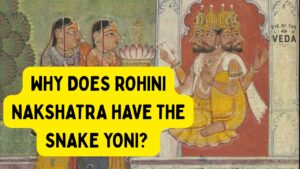
1. Misunderstandings Around Nakshatra Yonis and Animal Symbols
Nakshatras in Vedic astrology are each associated with a yoni (a sanskrit word that literally means “vagina” or “birth canal”), often represented by animals. Modern popular content, especially on platforms like YouTube, has misinterpreted or exaggerated these animal associations, leading to confusion and superficial interpretations. This has happened to such an extent that people will think of Rohini when they think of a snake yoni, or Mrigashira, but not even think of Ashlesha nakshatra, the star ruled by the Serpent Devas, or Scorpio, the sign of serpents.
- The concept of nakshatra yoni originated within medieval arranged marriage systems. This is called the “kuta” compatibility points system.
- Yonis describe each partners sexual reproductive compatibility as symbolic animal types (snake-like, horse-like, elephant-like vaginas).
- This system could be said to be chauvinistic, medieval, and a very “kali yuga” part of jyotish. This was only used for arranged marriages.
- Many modern interpreters mistakenly treat nakshatras as literally symbolized by their yoni animals (e.g., Rohini as a snake nakshatra, Jeshtha as a deer nakshatra).
- This results in over-romanticized and misleading interpretations, sometimes ignoring the deity or cosmic role associated with the nakshatra.
- Occasional valid symbolic overlaps exist (e.g., Ashwini nakshatra’s association with horses matches its horse-like yoni), but such instances are exceptions, not the rule.
2. The Snake Yoni of Rohini: Symbolism and Contradictions
Rohini nakshatra’s yoni is traditionally represented as a snake. This association, however, contrasts sharply with Rohini’s bold astrological energy and symbolism. In this video I explain how:
- Rohini is ruled by Brahma, the Creator deity, embodying fertility, growth, and creation, the opposite of snake like energy.
- A snake as Rohini’s yoni is paradoxical because snakes symbolize qualities opposite to Rohini’s energy—associated with Scorpio-like intensity, lust, sexuality, and trapped desires rather than growth and creativity, and the tendency to be always moving and growing.
- Interpreting Rohini purely through the snake metaphor leads to contradictions and misrepresentations of personality traits and life patterns.
3. The Mythological Narrative Explaining Rohini and Invaka Nakshatras
The mythology connecting Rohini, Mrigashira (also called Invaka), and Ardra reveals their deeper cosmic and psychological significance beyond the simplistic animal symbolism:
- Brahma created the world and all women, including Sarasvati, whom he regarded as a daughter but also lusted after.
- Sarasvati fled, transforming into various animals to escape Brahma’s inappropriate pursuit. She eventually took the form of a swift deer.
- Brahma took on a deer form and pursued her relentlessly across realms.
- Shiva (Rudra/Ardra nakshatra) intervened by decapitating Brahma to stop this violation.
- Shiva then placed the heads (his own and the deer’s) in the stars, forming the mrigashira nakshatra.
- This myth explains the connection between Rohini, Mrigashira, and Ardra nakshatras, linking lust, pursuit, and the cosmic order that Shiva sets right.
4. Spiritual and Symbolic Meaning of the Snake as a “Trapped Form”
The snake yoni of Rohini and Mrigashira embodies sexuality, lust, and entrapment rather than the positive creation symbolism. Thats because while Rohini and Mrigashira have their own positive symbolism and agendas, on the sexual level they can be very trapped and venomous:
- The Snake form symbolizes trapped sensual energy and an intense preoccupation with sexuality.
- According to spiritual masters and teachings (such as from Avatar Meher Baba), incarnating as a snake relates to karmic consequences of excessive lust and being spiritually trapped in sexual obsession.
- Brahma’s attempted violation and Shiva’s intervention underline themes of sexual excess, violation, and cosmic correction.
- Shiva, with snakes coiled in control (symbolizing yogic mastery over lust), contrasts Brahma’s uncontrolled desire.
- Rohini and Mrigashira nakshatras carry a stigma related to violating sexual norms or being excessively driven by sexual impulse—hence their snake yoni.
5. Cautions for Modern Practitioners and Astrologers
I stress care in applying the yoni symbolism in modern astrology:
- Avoid oversimplified or sensational animal associations to describe nakshatras.
- Remember that actual nakshatra meanings are deeply intertwined with their ruling deities, mythologies, and spiritual lessons. If they are not, they may not be correct meanings. Test them out on many charts before integrating them into your practice.
- For snake symbolism, the Ashlesha nakshatra is more appropriate as a pure “serpent” star, rather than Rohini or Invaka.
- Modern media and popular YouTubers often exaggerate or distort these symbols, leading to misinformation. Its understandable as the sexual connotations of a yoni make this category perhaps more appealing and colorful than the others.
Check out the full video here and let me know what you think in the comments.
https://www.youtube.com/watch?v=An_A9NLrRtI
Keep in mind this is just an excerpt from the nakshatra course, in the other classes I give thorough examples of what I am explaining here. The full course comes with a manual so long and detailed that it had to become a 432 page book. Get The Nakshatra Manual here on amazon, and read about it here for more information