Some Thoughts About The Moon

-moon-a

“The Moon reflects the Sun’s light and it does not emit its own light.”  -Rig Veda 1:84:15

“The Sun is the upholder of all light. The Moon and all other planets do not possess light of their own. All of them shine with the light of the Sun.”  -Atharva Veda 14:1:1


The Moon is the brightest object in the night sky. With its fascinating luminescence and mysterious waxing and waning behavior, it is no surprise that it has been the subject of great interest for practically every culture on the planet.  It has probably been an object of contemplation ever since humanity expressed such an ability, and for good reason,  as there are so many interesting qualities to appreciate about this luminary body.

To fully understand the Moon, we must first look to the Sun, the other great luminary, and the source of the moons reflected light.  In Jyotish (vedic astrology), each planet represents an aspect of our own self.  The Sun is the symbol of the real Self (note the capital S, referring to our eternal Self or Soul, not the impermanent and always changing personality self).  As the body that the rest of the planets revolve around, it signifies the real and eternal “Soul of All”.  The Sanskrit word used to describe the sun in this context is “Sarva Atma”. “Sarva” means “all”, “of all”, “everything” and “all things”.  “Atma” means “soul” or “self”.  So the Sun is the life of everything.  All is one with the Sun at the deepest level of existence.  The Sun relates to that pure consciousness that manifests everything in existence.  Mathematically, the Sun is like the number 1.

The Moon is the other main source of light and luminescence in our world.  As the above quotes from the ancient Rig Veda and Atharva Veda explain, the moon has no light of its own, and is merely reflecting the Suns light.  In the Indian tradition of astrology, the moon is the planet (astronomically it is considered a satellite, but for astrological purposes it is considered a planet, as it behaves like other planets from our perspective on Earth) that represents the ego-mind and the incarnated human being.  It is the reflection of the Sun, the Supreme Self.  Human beings can certainly be reflections of the Supreme Self, but not all the time, just like the moon, who can sometimes be full and reflect the Suns light perfectly, and other times be so dark it cant even be seen.  The sanskrit word given for the Moon is “Manas”, which means “mind”, but not in the western sense of the mind as the intellectual processor, but as the thing that is experiencing life. The mind is what experiences life through the five senses.  Interestingly, because the English language has roots in the Vedic Sanskrit language, this Sanskrit word “Manas” is the root origin of all three of the English words “man”, “mind” and “moon”.

When we think about the Sun, how hot and bright it is, how intense and draining it can feel to be exposed to it for long stretches of time, it can be easy to feel overwhelmed by it.  Just as Man cannot easily perceive the Sun for more than a moment without having severe eye damage, he likewise has difficulty perceiving God in daily life. It really is logical to correlate the Sun with the Supreme Self, or God, as it is the sustaining source of all that is living in our world. Its course is so regular and unchanging, and we live our lives by it….yet we cannot understand it or even look at it normally.  Life cannot exist on Earth without the support of such a powerful solar body.

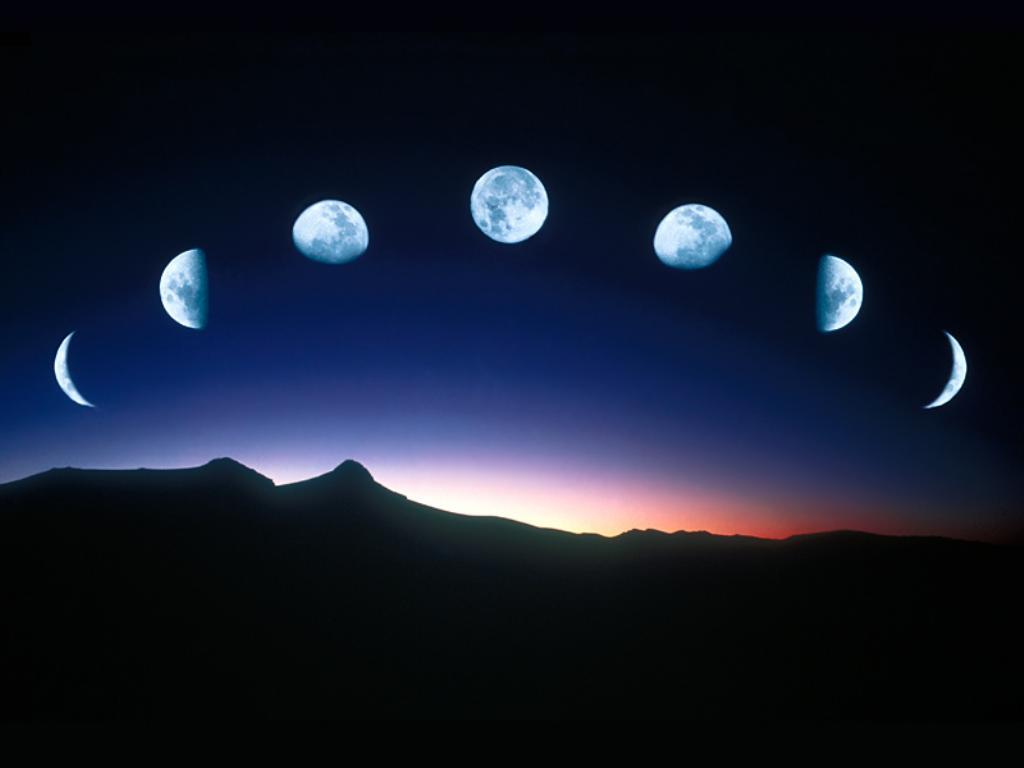
In the same way, when considering the Moon, its constant waxing and waning, changing signs, moving to and fro, and occasionally being eclipsed… It is much more symbolic of a human beings awareness. We wax and wane, have good days and bad, seem to go through cycles we have little control of and in an overall sense are very changeable by nature.  Hopefully this symbolism is making itself clear now.  Our ego-mind is just like the changeable moon.  The ego-mind can be thought of as merely a composite of personality characteristics, that we do or do not like, that are taken from a VAST amount of experiences we have had.  So it is always changing as well, as we have new experiences and out grow old experiences that we previously identified with.  For example, someone may not like spicy food, but then one day they have a delicious spicy soup in just the right quantity, and fall in love with it, and how it makes them feel. Then their ego mind will say, “Now I LIKE spicy food”.  Their ego has changed and adapted just like the ever changing moon.

And that brings us to another interesting thing about the moon, or ego-mind; its adaptability.  Each planet is said to relate to the other planets as being a friend, neutral, or enemy to them in the Vedic system of astrology.  And these relationships are based on the natural energies, or “rays” of each planet.  Like how certain colors just go well naturally, and others “clash”.  And when it comes to the moon, it is the only planet that has no enemies, only friends or neutrals.  All the other planets have at least one, two, or three enemies.  What does this tell us about the ego-mind?  Contemplating this reveals many things, but particularly significant is that the moon, or ego-mind, will latch on to and feel comfortable with anything it can in order to survive as the individual ego.  Even if that thing is not good for it and harmful.  This is why the separate egoic sense of self is such a source of pain and suffering.  It will not refuse identifying with even the worst elements of life in order to keep growing and experiencing.  The Moon with Jupiter for example, is showing that a persons mind is comfortable identifying with Jupiterian things such as knowledge, wisdom, a sense of purpose in life, and optimism.  The Moon with Saturn, on the other hand, shows a person identified with suffering, pain, lack, hard work, and the difficult sides of life.  Oftentimes they will actually be somewhat comfortable with the painful sides of life. They will be used to struggling, and enduring. When things are going great in life, they may actually think, “something isnt right”, but it is because they just are not as used to life going so easily.  The Jupiterian-moon person may be the opposite, and when life is going right, they will stop and think “life IS going right”.  This shows us that some things are naturally more beneficial for us to identify with than others, but if we decide to, we can latch on to even the harshest aspects of life, in order to keep growing and experiencing life as it is happening…

The moon, or mind, can therefore work out well for a person, or not so well for a person, depending on what they are identifying with, as revealed by asessing the moon in a horoscope.  But either way, whether ones mind is more comfortable with wealth or poverty does not change the fact that they are identifying with a temporary and changeable sense of themselves, which waxes and wanes.  It is still not the real Self.  So from the Yogic viewpoint,  identifying with this passing sense of self that one is comfortable with can bring happiness or sadness, but will still invite suffering to the “moon-identified”, or ego-minded person, until they are able to become “Sun-identified”, or “Soul-minded”.  We know already that the Sun is the “Self of all”, hence the emphasis on “Self-realization” from the yogis and enlightened ones.


Why is it called “Vedic Astrology”?

The sanskrit word for astrology and astronomy is “Jyotish”. “Jyoti” means “light” and “ish” means “God” or “the supreme spirit”.  This ancient Indian word gets right to the core of the matter by saying that astrology/astronomy is the study and classification of God’s Light and its influence on life.  So this is a great term, but there is already too many confusing foreign terms for the average astrological client in the west, and so the more common name of “Vedic Astrology” will suffice for now.

Vedic Astrology is the main term currently being used for the system of astrological philosophy and methodology that originated in the vedic philosophical tradition of ancient India.  It is also sometimes called Hindu Astrology or Yogic Astrology, or Siddha Astrology.  The term “vedic” seems to fit the best, in my opinion, for several reasons:

1) The word “Veda” or “Vedic” roughly means “the accurately revealed knowledge” but it also means  “that knowledge which is eternal and true”. The culture of India and the Religion of Hinduism (also called Sanatan Dharma, a more accurate term), is based on the holy teachings of the “Vedas”,  ancient scriptures which contain the eternal truth of life.  So the aim of the religious Hindu is to “know the Veda” or “know the eternal truth of life”. So essentially the word Veda means “the truth”, or “the Knowledge”.

So to call astrology “Vedic Astrology”, means that one is practicing an astrology based on revealed Truth, or “Veda”.  Truth is truth, and is not confined to one particular culture or time period…. Not even the Vedic culture!  Some may not like me saying this, but Vedic Astrology can be practiced by anyone anywhere, regardless of whether they have any knowledge of Sanatan Dharma, or Hinduism, as it is commonly called.  The knowledge is within us all and can be accessed by anyone.

2) The word “vedic” can also mean “science” as science is a way to gain accurate knowledge that can be replicated and is relatively consistent. Jyotish, or Vedic Astrology, has the potential to be a “super science”, in that it can help one gain information on any other department of life.  Eventually it will get back to that place of prominence, but at its current state, Jyotish is just beginning to re-emerge out of the dark ages, when the knowledge was almost entirely lost.  It will take time and much more research before it can rightly be considered a science, but it is scientific in its nature.  As time goes on we will not have to rely as much upon intuition, and will more and more have a methodical and scientific framework to use along with intuition.

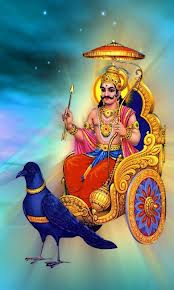
saturnPic1

Vedic Astrology is Being Reborn

A diagram of the Yugas as outlined in the introduction  of his book, The Holy Science.  They are the same as the Greek ages of Iron, Bronze, Silver, and Gold.
A diagram of the Yugas as outlined in the introduction of Yukteswar’s book, The Holy Science. They are the same as the Greek ages of Iron, Bronze, Silver, and Gold, and proceed in an ascending and descending pattern, so that both Kali Yugas are consecutive, and both Satya Yugas are as well.


Astrology is too vast both mathematically and philosophically, to be rightly grasped except by men of profound understanding.  If ignoramuses misread the heavens, and see there a scrawl instead of a script, that is to be expected in this imperfect world.  One should not dismiss the wisdom with the ‘wise’. ” – Sri Yukteswar


Astrology is one of the oldest sciences known to man.  When we look at the ancient cultures all over the globe, we see that Astronomy and Astrology had a prominent role to play in regulating society and daily life.  And the more we learn about some of these ancient cultures, the more we realize how refined and scientifically developed many of them were.

The Rishis, or Seers, of ancient India described a grand cosmic cycle (24,000 years approx.) with 4 eons called “yugas”.  This is the same as the Greek concept of the Iron, Bronze, Silver, and Gold Ages.  The Iron, Bronze, Silver, and Gold Ages correspond to the Kali, Dwapara, Treta, and Satya Yugas.  The same situation is described in both Greek and Indian traditions, with humanity being very enlightened and happy in the Golden Age, and then slowly falling from that peak down to the materialism and ignorance of the Iron Age.  The cycle then goes back in an ascending order to the Bronze Age, then to the Silver Age, and finally another Golden Age occurs.  The Vedic Seers describe the Kali yuga as the darkest age when ignorance and suffering are in full swing.  During this approximately 1,200 year period the Earth is furthest from the galactic center and so the average human consciousness is somewhat dimmed.  This occurred around 500 AD and continued into 1700 AD, when the Dwapara yuga began to ascend for 2,400 years, bringing in more intellectual capabilities for mankind and technological developments to improve the quality of life on earth.  The closer we get to the center of the galaxy, the more intelligent the average human becomes, and therefore society advances as a whole. In the  Treta yuga, or the Silver Age, humanity is said to be advanced, civilized and life is more enjoyable.  It will start in 4100 AD and run for 3,600 years.  Then comes the Satya yuga, or the Golden Age, which will go for 4,800 years, and humanity will be at its peak of civilization.  Astrology itself is really more of a Treta and Satya yuga science.

By researching into the Iron Age we can see that things were pretty bad during medieval times, with the average person living only to their 30s and the massive losses caused by the plagues.  That was Kali yuga.  This is now Dwapara yuga, the electrical age, and life is getting better.  We are learning to use electricity and make our lives easier as a result.  Still not ideal though, and so Astrology is in the same state.  It is not until the higher ages of Silver and Gold, Treta and Satya Yugas, that Astrology is fully appreciated and understood by the entire population.  We can see evidence of this when we research cultures such as Egypt, that experienced what seemed to be a “Golden Age”, and we find astrological markers and symbolism throughout the period.

This is why it is an exciting time, because as our society is advancing, more people will begin to be open to Astrology and other ancient arts, and with more research and practice by these same people, Astrology itself will begin to flower back into the vast art and science that it truly is.  With the rise of computers it has become far easier for calculations to be made, making astrological calculations more open to the publics participation.  This has been an immense help that the Dwapara Yuga has brought about.

Because much of the methodical and scientific side of Astrology has been lost during the dark age of Kali Yuga, much of the astrology we are familiar with is diluted and not very accurate.  In some cases, the scriptures are unclear, or perhaps mistranslated, and many Astrologers have not bothered to verify the authenticity of techniques they use.  To blindly use techniques without verifying their accuracy is no different from going to a church and blindly believing what a preacher may tell you without thinking for yourself about the matter.  Its surprising to think astrologers have been that way, but these are the residues of the darkness of Kali Yuga.

As time goes on and we advance more into the Bronze Age of Dwapara Yuga, the whole planet will become gradually more intelligent and all the arts and sciences will grow, with Astrology being no exception.  Astrologers will not only use intuition, but will have a logical and methodical approach that can be replicated over and over, which is the way Astrology was meant to be practiced.  This logical framework will also improve our intuition, because it will give a solid and accurate foundation for our subconscious mind to work with and make the intuitive side of the mind more reliable.

As we progress more and more as a civilization, the world will become more globalized and unified; and the lost knowledge of ancient cultures will be pieced back together like a jigsaw puzzle.  Already the greatest sign of an ascending Bronze Age and a more unified world culture is the birth of the internet and other electronic devices.  It allows people of all walks of life to share knowledge and relate in ways that just would not have seemed possible a century ago.

That is what makes me so excited to be studying and practicing Astrology, to be typing away on this site, and to be sharing this wonderful thing that the world is rediscovering.